The trek
Kilimanjaro is the highest mountain you can walk up without ropes. That makes it sound easy, and it is not: Uhuru Peak stands at 5,895 m, where the air holds half the oxygen of sea level. What decides whether you get there is how well your body adapts, and that is mostly a matter of time.
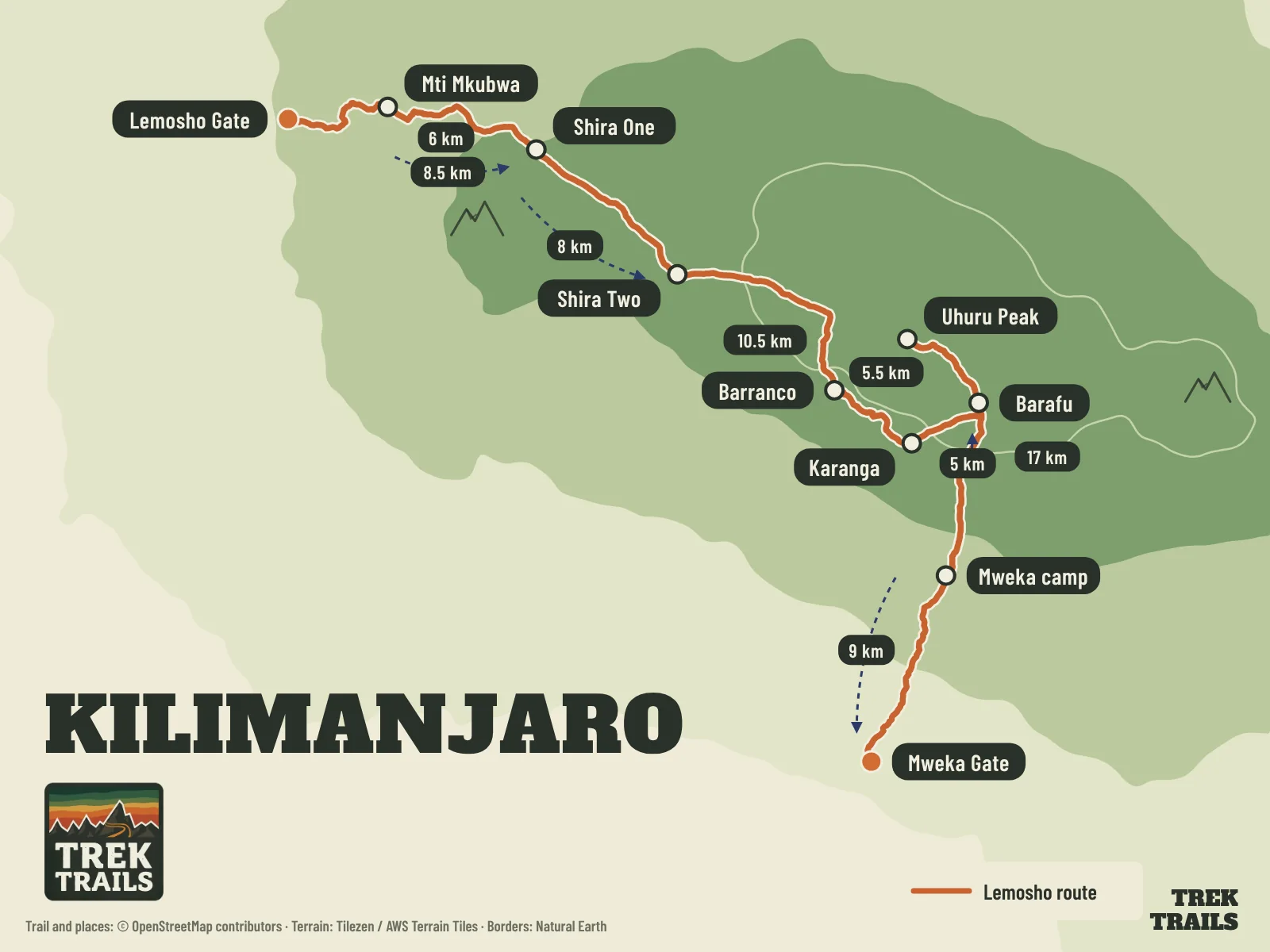
The Lemosho route gives you that time. It starts in rainforest on the quiet western side, crosses the Shira plateau, traverses beneath the southern glaciers and only then turns uphill for the summit. Eight days on the mountain, with a "climb high, sleep low" profile, is why its success rate is among the best.
Made for
Determined walkers who can be patient with a slow pace.
Think twice
People in a hurry. Altitude punishes speed far more than a lack of fitness.
Highlights
- Colobus monkeys in the forest on day one
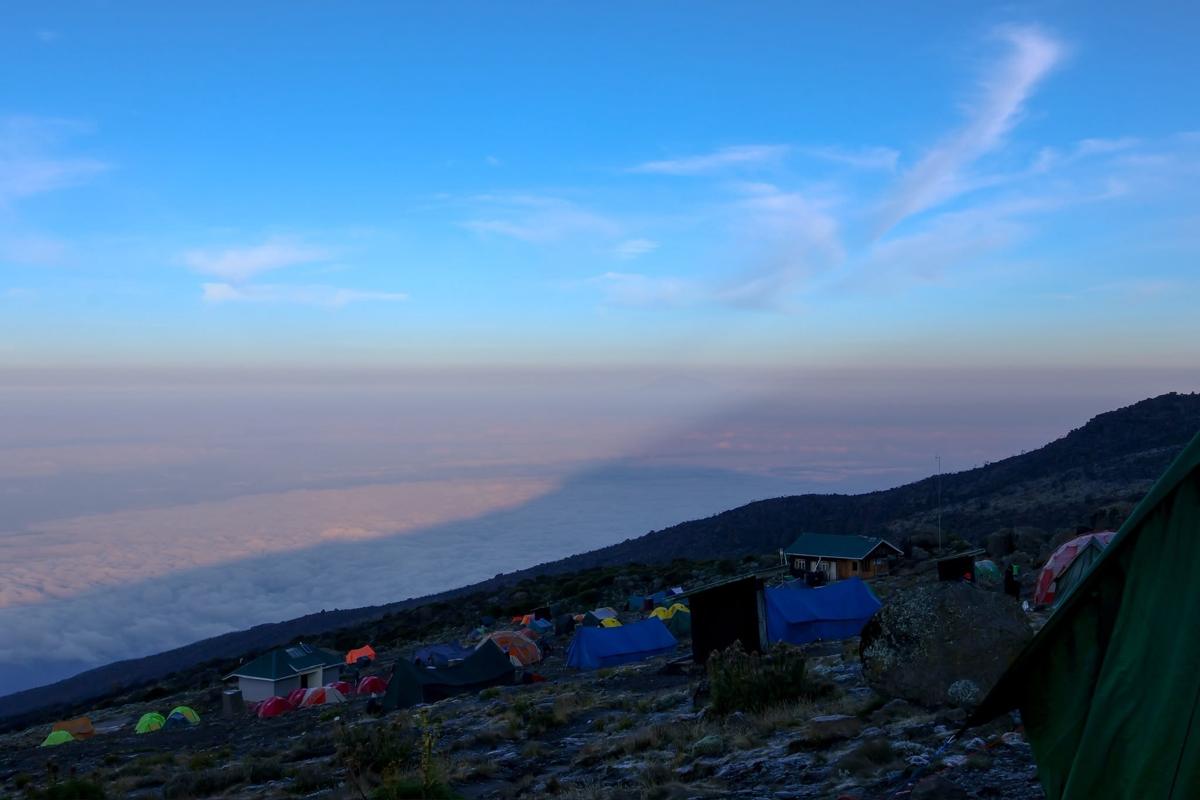
- Lunch at Lava Tower, 4,600 m, before dropping to sleep lower
- The Barranco Wall, a 250 m scramble that is more fun than fearsome
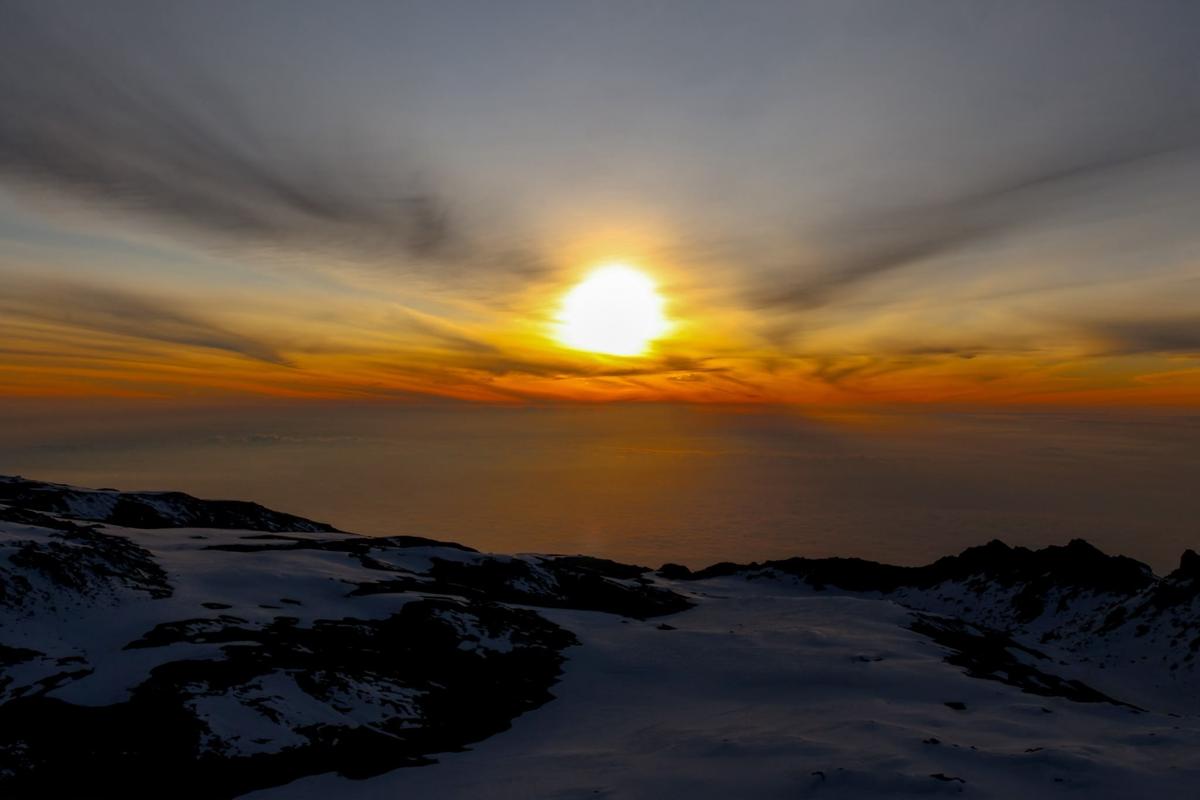
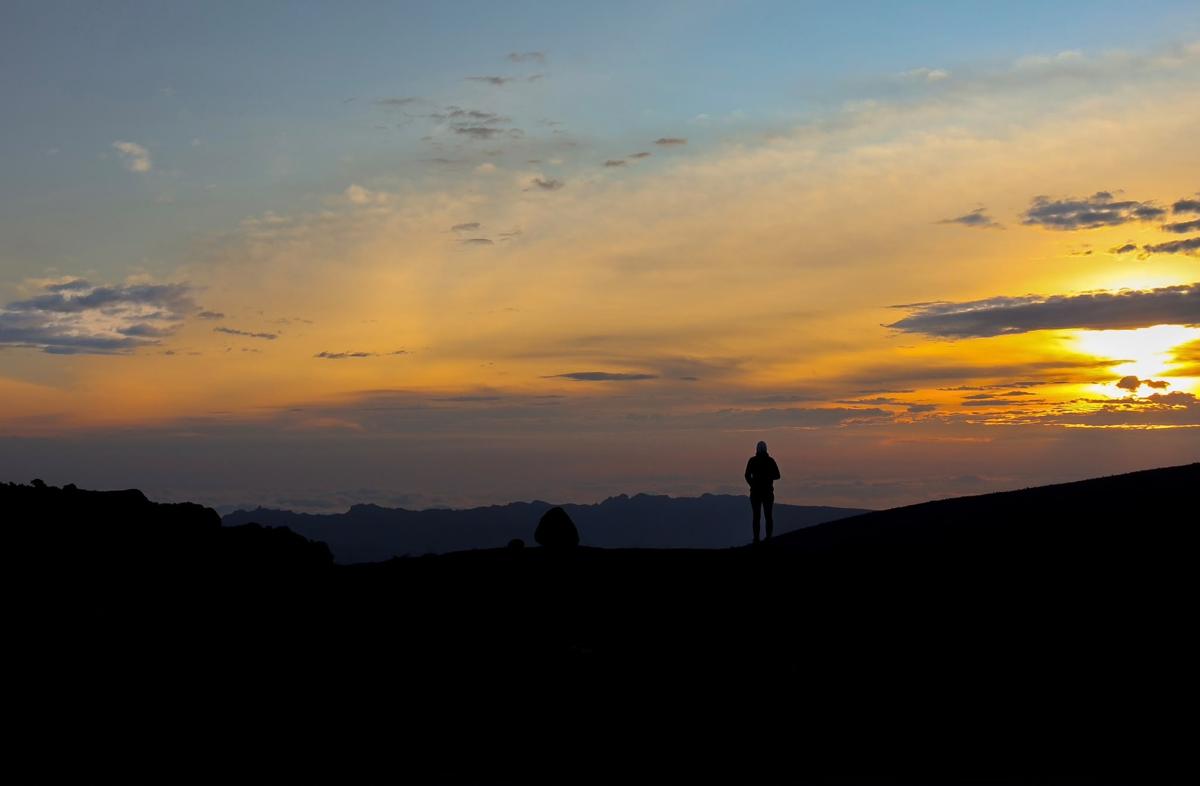
- Sunrise at Stella Point on the crater rim
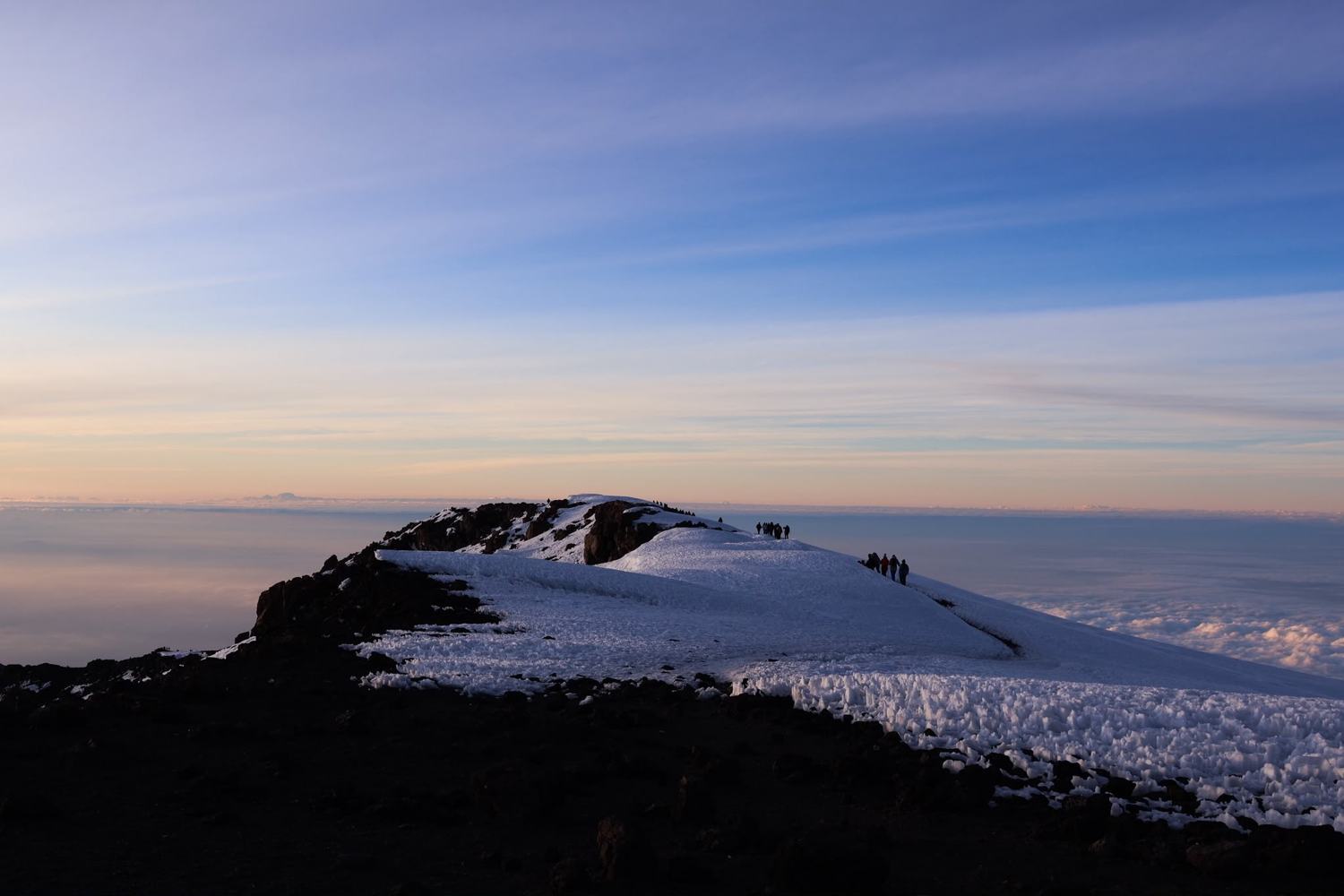
- Uhuru Peak, with the ice fields beside you and Africa below
Stage by stage
| Day | Stage | Km | Up | Down | Time |
|---|---|---|---|---|---|
| 1 | Londorossi Gate → Mti Mkubwa (2,895 m)Rainforest | 6 | +535 m | −0 m | 3–4 h |
| 2 | Mti Mkubwa → Shira One (3,600 m)Out of the forest onto the plateau | 8.5 | +810 m | −90 m | 6–7 h |
| 3 | Shira One → Shira Two (3,900 m)Easy acclimatisation day | 8 | +300 m | −0 m | 5 h |
| 4 | Shira Two → Barranco (3,950 m)Up to Lava Tower, down to camp | 10.5 | +700 m | −650 m | 6–7 h |
| 5 | Barranco → Karanga (4,035 m)The Barranco Wall | 5.5 | +380 m | −320 m | 4 h |
| 6 | Karanga → Barafu (4,600 m)Alpine desert; rest for the summit | 5 | +550 m | −0 m | 3 h |
| 7 | Barafu → Uhuru Peak → Mweka camp (3,100 m)Start around 1 am; summit at sunrise | 17 | +1,295 m | −2,795 m | 12–15 h |
| 8 | Mweka camp → Mweka GateBack through the forest | 9 | +0 m | −1,430 m | 3–4 h |
Good to know
How hard is it?
Severe, though not technical. Until summit night the days are short and deliberately slow. The summit day is the test: 1,300 m up in the dark and cold, then nearly 2,800 m down, twelve to fifteen hours in all. Mild altitude symptoms are normal; guides check oxygen levels daily.
Where you sleep and eat
Tents carried and pitched by the crew, with meals served in a mess tent. No showers. It is well below freezing at the highest camp. A hotel in Moshi before and after.
Getting there
Fly to Kilimanjaro airport, one hour from Moshi. Tanzania requires a visa, applied for online, and you should see a travel clinic about malaria and vaccinations.
When to go
January to early March and June to October. April, May and November are the rainy seasons.
What to bring
A down jacket and a sleeping bag rated well below zero, layers from T-shirt to shell, warm gloves, a headtorch, and insurance that covers trekking to 6,000 m.
How to book it
On your own
There is no independent option: park rules require every climber to go with a licensed guide and crew. What you choose is the operator. Look for one that is a partner of the Kilimanjaro Porters Assistance Project, which checks that porters are paid and equipped fairly.
If you would rather walk than organise, The Kilimanjaro Trail climbs Lemosho in eight days with one guide per two climbers, a porter-welfare partnership, daily health checks and park fees included. Prices start from about €2,489 per person.
See The Kilimanjaro Trail